
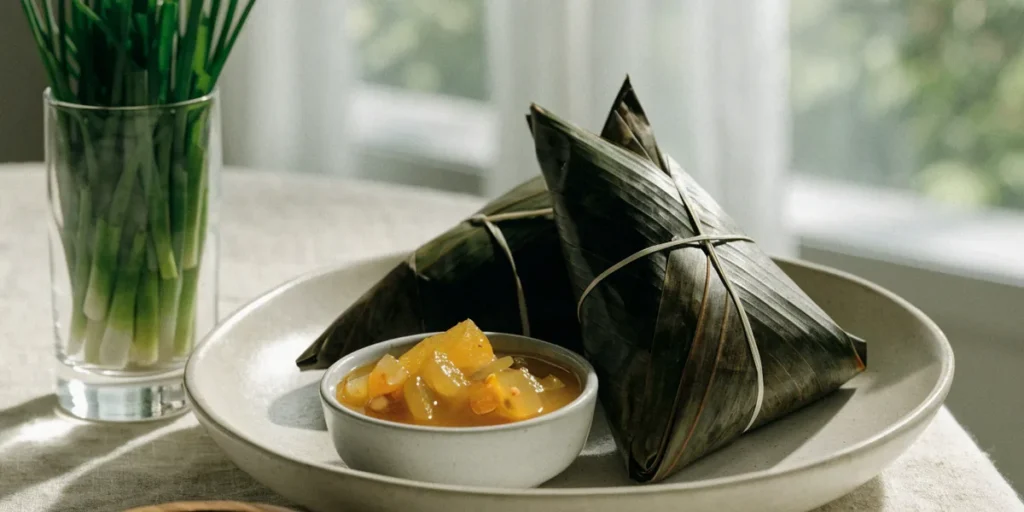
Classic Sides: Puso, Atchara and More
The first time we helped carve a whole Cebu lechon at a backyard party in Sydney, we expected the crispy skin to be the star. It was—right up until someone tore open a woven pouch of puso, spooned atchara onto their plate, and announced the sides were the best part. They weren’t wrong. A proper Filipino lechon feast is never just roast pork. The sides—puso, atchara, and more—are what turn a rich, crackling roast into a balanced, memorable meal.
Why Sides Matter at a Lechon Feast
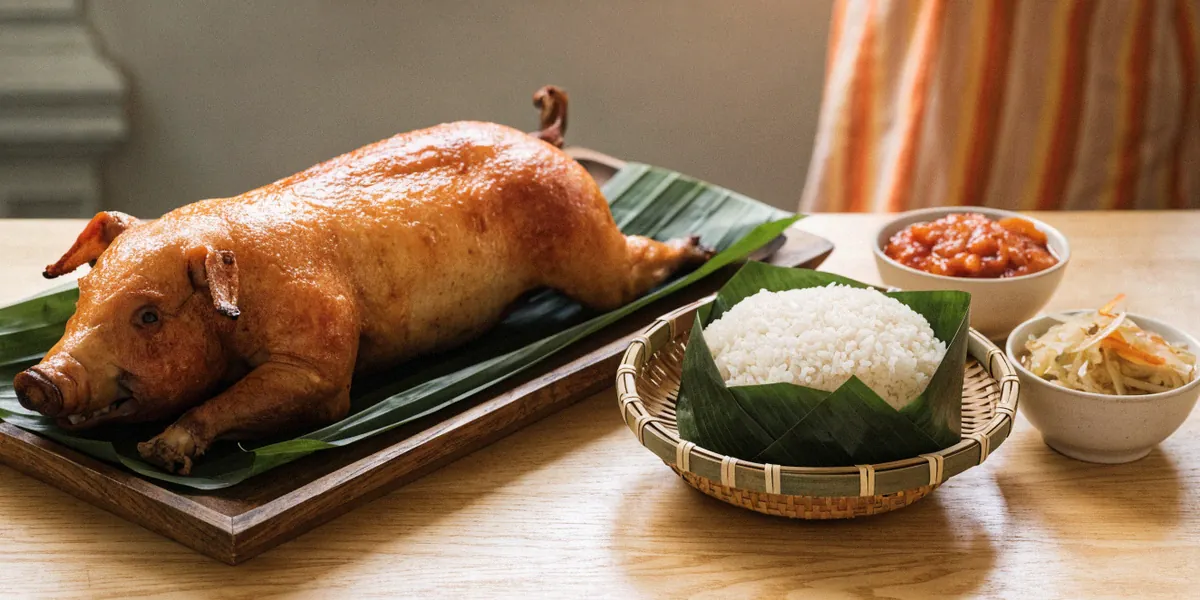
Lechon is intensely rich. The skin is glassy with fat, the meat is fatty and salty, and the flavour is built on garlic, lemongrass, and star anise. Eat a few bites on their own and you’ll reach for something sharp, fresh, or starchy to reset your palate. That’s exactly what the classic sides do.
In the Philippines, a lechon spread is never served with just the pig. There’s always a spread of puso, pickles, and salads, and the table is judged on how well those sides work together. In Australia, we’ve learned to adapt—substituting local ingredients, sourcing from Asian grocers, and adding small twists that suit the local palate—while keeping the traditions intact. The sides are not garnish. They’re the reason the feast feels like a feast.
The Role of Acid and Crunch
Acid cuts through fat. Crunch adds contrast. A squeeze of calamansi, a spoonful of atchara, or a bite of fresh cucumber gives the palate a break between rich mouthfuls of pork. This is why Filipino tables almost always pair lechon with pickles and salads rather than heavy sauces. The crunch of the skin needs the crunch of fresh vegetables to keep the meal balanced.
Balancing Richness with Freshness
Freshness is the counterweight. A smoky eggplant salad, a vinegary pickle, or a plain steamed rice cake all lighten the meal. At our own gatherings, we’ve noticed that guests who claim they can’t eat much lechon will keep going back as long as the sides are there. That’s the whole point.
Puso: The Heart of Filipino Rice
If you’ve ever been to a Cebu lechon party, you’ve probably seen puso. It’s hanging rice cooked in woven coconut leaves—little diamond-shaped parcels that hang in bunches at the table. It’s a staple at Cebu lechon parties, and it’s the side we get asked about most.
What Is Puso?
Puso is rice cooked inside a woven pouch made from coconut leaves. The leaves are woven into a diamond shape, filled with rice, and boiled or steamed. The leaf imparts a faint, grassy aroma, and the rice stays compact and slightly sticky. In the Philippines, puso is sold in bunches and eaten by hand, which makes it perfect for a casual, communal feast. It’s practical, portable, and traditional—and it’s a staple at Cebu lechon parties.
How to Serve Puso with Lechon
In Australia, we source banana leaves from Asian grocers like Manila Mart in Sydney, or we use foil as a substitute when we’re short on time. The rice is the same; the wrapping is a detail. To serve puso with lechon, we keep it warm in a basket, let guests peel the leaf open, and pair it with a piece of tender pork and a spoonful of atchara. If you’re catering, we recommend ordering puso in bulk—it’s the side that disappears first.
Atchara: The Tangy Pickle That Cuts Through Fat
Atchara is a pickled green papaya relish, and it’s the side we consider non-negotiable with Cebu lechon. It’s a must with Cebu lechon for a reason: the tangy, slightly sweet pickle balances the fat and salt of the roast pork. It often includes carrots, onions, and raisins, and the vinegar base gives it a bright, sharp edge that makes the whole plate feel lighter.
Traditional Atchara Ingredients
Traditional atchara is made with grated green papaya, carrots, onions, raisins, ginger, garlic, and vinegar, sweetened with sugar. The papaya is salted and squeezed to remove excess water, then mixed with the other ingredients and pickled. The result is a crunchy, tangy relish that’s served cold. It’s a staple at Filipino tables and a must with Cebu lechon.
Australian Twists on Atchara
In Australia, we often add pineapple or sultanas for an Australian twist, which gives the pickle a slightly fruitier, sweeter profile. We’ve also seen versions with cucumber or zucchini when green papaya is hard to find. The core recipe stays the same, but the twist makes it feel more local. If you’re making atchara for a lechon party in Australia, we suggest keeping the vinegar and sugar in balance—too sweet and it stops cutting the fat.
More Classic Sides: From Dinuguan to Ensaladang Talong
Puso and atchara are the essentials, but the classic Filipino lechon table has more. Filipino catering in Australia often includes these sides alongside lechon, and they’re worth knowing about.
Dinuguan: The Bold Companion
Dinuguan is a blood stew made with pork blood, vinegar, garlic, and chili. It’s bold, dark, and deeply savoury. It’s not for everyone, but for those who love it, it’s the ultimate companion to lechon—the vinegar and spice cut through the richness of the pork. It’s often served with puso or steamed rice.
Ensaladang Talong: Smoky and Fresh
Ensaladang Talong is a smoky eggplant salad. The eggplant is grilled until charred, then peeled and mixed with vinegar, garlic, and tomatoes. It’s smoky and fresh, and it pairs well with rich lechon. It’s a lighter side that balances the heaviness of the roast.
Steamed Rice: The Unsung Hero
Steamed rice is the quiet side that holds the whole meal together. It’s the base for dinuguan, the partner for lechon, and the fallback for guests who want something simple. In Australia, we always make sure there’s a big bowl of steamed rice at the table, even when puso is on the menu.
Pairing Sides with Cebu Lechon: Our Team’s Recommendations
We love pairing sides with Cebu lechon, and we’ve tested plenty of combinations. Here’s what our team recommends.
Classic Combinations
- Atchara with crispy skin: The acid and crunch of the pickle cut through the fat of the skin. It’s the pairing we recommend first.
- Puso with tender meat: The compact rice soaks up the juices and balances the saltiness of the meat.
- Ensaladang Talong with lechon: The smoky eggplant salad pairs well with rich lechon, and it adds a fresh element to the plate.
- Dinuguan with steamed rice: The bold stew and the plain rice make a classic, hearty combination.
Modern Twists for Australian Palates
For Australian palates, we’ve seen success with pineapple atchara, a lighter dinuguan with less chili, and a fresh cucumber salad alongside the traditional ensaladang talong. We also love supporting local Filipino caterers in Sydney and Melbourne who specialize in lechon—they often have their own twists on the classics, and they’re worth trying.
Where to Find These Sides in Australia
If you’re planning a lechon feast in Australia, you’ll need to know where to find the sides.
Filipino Grocers and Markets
In Sydney, Manila Mart is a reliable source for banana leaves, puso, and atchara ingredients. In Melbourne, the Asian supermarkets in Footscray are the place to go for green papaya, banana leaves, and Filipino pantry staples. We also recommend checking local Filipino grocers for pre-made atchara and puso if you’re short on time.
Catering Services That Include Sides
Filipino catering services in Melbourne and Sydney often offer lechon packages with classic sides. If you’re ordering lechon for a party, ask whether puso, atchara, and ensaladang talong are included. Many caterers will build a complete package with the sides, which makes hosting much easier.
FAQ
What is puso and why is it served with lechon?
Puso is rice cooked in woven coconut leaves. It’s a staple at Cebu lechon parties, and it’s served with lechon because it’s portable, traditional, and balances the rich pork.
Can I find atchara in Australia?
Yes. Filipino grocers in Sydney and Melbourne stock atchara, and Asian supermarkets in Footscray carry the ingredients. You can also make it at home with green papaya, carrots, onions, and raisins.
What is Ensaladang Talong?
Ensaladang Talong is a smoky eggplant salad. It’s made with grilled eggplant, vinegar, garlic, and tomatoes, and it pairs well with rich lechon.
Do Filipino catering services in Australia offer lechon packages with sides?
Yes. Filipino catering services in Melbourne and Sydney often offer lechon packages with classic sides like puso, atchara, and ensaladang talong.
Where can I buy banana leaves for puso in Australia?
In Australia, banana leaves for puso can be found at Asian grocers like Manila Mart in Sydney. Melbourne’s Asian supermarkets in Footscray also stock them.
The right sides elevate lechon from a simple roast pork to a memorable Filipino feast. Whether you’re making puso, mixing atchara, or ordering a complete catering package, the classics are worth trying at your next gathering. We’d love to hear how you pair them.