
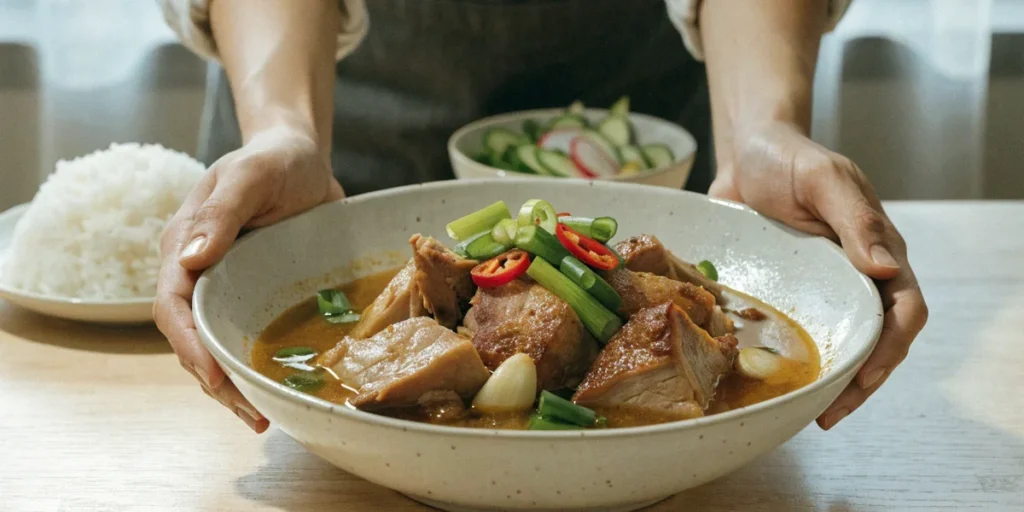
What to Do with Leftover Lechon: Paksiw
You’ve just hosted a birthday, a christening, or a handaan for thirty relatives in Sydney, and the centrepiece was a whole Cebu lechon. The crackling is gone, the guests have left, and now you’re staring at a mountain of leftover roast pork wondering how on earth you’ll get through it. We’ve been there. Before you reach for the sandwich bread, let us introduce you to paksiw na lechon — the dish that Filipino families have relied on for generations to turn leftover lechon into something arguably just as good as the original.
Why Paksiw is the Ultimate Leftover Lechon Dish
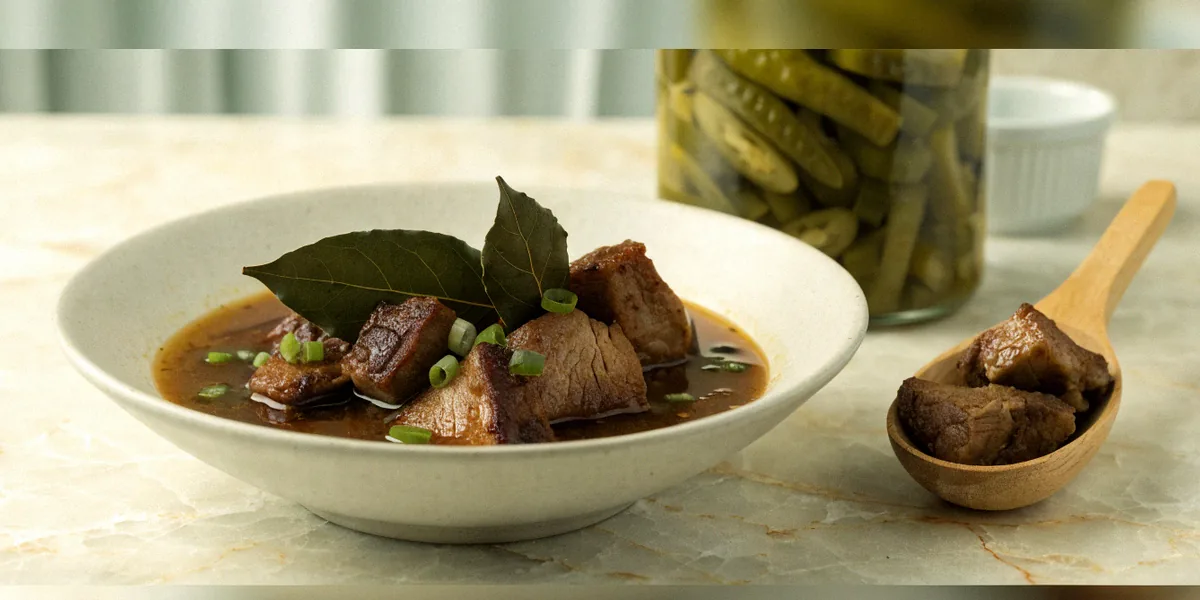
Paksiw na lechon is a traditional Filipino dish often made with Cebu lechon, and it’s the reason nobody in a Filipino household ever panics about leftovers. Instead of drying out in the fridge, the pork gets simmered in vinegar, garlic, and spices until it becomes tender, tangy, and deeply savoury. In Cebu, where lechon is practically a food group, paksiw is a standard follow-up act the day after a celebration. Filipino-Australians have carried the same habit here — one big lechon on Saturday, paksiw for the rest of the week.
The Filipino Tradition of Paksiw
Paksiw is a cooking method, not just a single recipe. The word refers to simmering food in vinegar, and Filipinos apply it to fish, pork hocks, and of course lechon. What makes paksiw na lechon special is that it starts with meat that’s already roasted and seasoned, so you’re building flavour on top of flavour. Many families add a splash of lechon sauce or liver sauce to round out the sourness, which gives the dish a rich, almost gravy-like character. It’s the kind of food that tastes even better on day two.
Why It Works So Well with Lechon
Lechon is fatty, salty, and smoky — all things that vinegar cuts through beautifully. The acid in paksiw balances the richness of the pork and stops it from feeling heavy, while garlic, peppercorns, and bay leaves soak into the meat. Even the skin, which goes soft during simmering, turns into a gelatinous, flavour-packed treat that many people fight over. If you’ve ever found leftover lechon a bit dry straight from the fridge, paksiw is the fix.
Essential Ingredients for Paksiw na Lechon
The ingredient list is short, which is part of the beauty of this dish. You likely already have most of it in your pantry, and anything you’re missing is easy to find in Australia.
- Leftover lechon (chopped into serving pieces)
- White vinegar — cane or coconut vinegar if you can get it
- Garlic, crushed and roughly chopped
- Bay leaves
- Whole black peppercorns
- Lechon sauce or liver sauce (Mang Tomas is the classic brand)
- Brown sugar, to taste
- Salt or fish sauce, to taste
- Water or pork stock
- Optional: sliced onion, chilli, and a splash of soy sauce
The Role of Vinegar and Spices
Vinegar is a key ingredient in paksiw, acting as a preservative and flavour enhancer. That preservative quality is exactly why paksiw exists — in the days before refrigeration, simmering meat in vinegar kept it safe to eat for longer in a tropical climate. The spices do more than flavour the pork: bay leaves and peppercorns add aroma and a gentle warmth that stops the vinegar from tasting harsh. Don’t skip them, and don’t rush the simmer — the spices need time to open up.
Finding Filipino Ingredients in Australia
Asian grocers in Sydney’s Blacktown and Melbourne’s Footscray stock Filipino ingredients, including cane vinegar, Mang Tomas lechon sauce, and bay leaves sold in generous bundles. In Brisbane, check the Asian supermarkets around Inala; in Perth, the shops along William Street in Northbridge are a good bet. If you can’t get cane vinegar, plain white vinegar from Coles or Woolworths works fine — just start with a little less and adjust. Coconut vinegar, available online and at specialist Filipino stores, gives the most authentic result.
Step-by-Step: How to Make Paksiw from Leftover Lechon
This recipe serves four to six people and takes about 45 minutes from fridge to table.
Preparing the Lechon
- Chop your leftover lechon into bite-sized pieces, roughly 4–5 cm. Include some skin and fat in every piece — that’s where the flavour lives.
- If the meat is very dry, don’t worry. The simmering liquid will rehydrate it.
- Peel and crush six to eight cloves of garlic. Slice one onion if you’re using it.
Simmering and Seasoning
- In a wide pot, combine 1 cup of vinegar, 1 cup of water or pork stock, the garlic, 3 bay leaves, and 1 tablespoon of whole peppercorns.
- Bring to a gentle boil, then add the lechon pieces. Do not stir for the first five minutes — this lets the vinegar cook off its raw sharpness.
- Add 3–4 tablespoons of lechon sauce, 1 tablespoon of brown sugar, and a pinch of salt. Stir gently.
- Lower the heat and simmer uncovered for 25–30 minutes, stirring occasionally, until the liquid reduces and the pork is tender. The sauce should coat the back of a spoon.
- Taste and adjust: too sour? Add a little more sugar. Too sweet? Add a splash more vinegar. Not salty enough? A few drops of fish sauce will fix it.
The key technique here is patience with the simmer. Rushing it means the vinegar stays sharp and the pork stays tough. Give it the full half hour and the flavours will meld into something far greater than the sum of its parts.
Serving Suggestions
Paksiw is commonly served with steamed rice, and honestly, that’s all you need. The sauce begs to be spooned over rice. If you want to bulk out the meal, add a side of sautéed kangkong or a simple tomato and salted egg salad. A cold San Miguel or a glass of iced calamansi juice rounds things off nicely.
Tips and Variations for Perfect Paksiw
Once you’ve made paksiw a few times, you’ll start adapting it to whatever’s in your fridge. Here’s how we like to do it.
Choosing the Best Cuts
Ribs and belly sections are ideal because they hold their shape and stay moist. If you have a lot of lean meat from the leg, add it toward the end of cooking so it doesn’t toughen. Skin-on pieces are the prize — they turn soft and sticky in the sauce.
Vegetable Add-Ins
Eggplant is the most common addition and soaks up the sauce beautifully. Bitter melon (ampalaya) adds a pleasant bitterness that balances the richness, though it’s an acquired taste for some. Green beans, okra, and even chunks of pumpkin work well too. Add firmer vegetables in the last 10 minutes of simmering so they don’t turn to mush.
Storage and Reheating
Paksiw can be stored in the fridge for up to 3 days in an airtight container. In Australia’s warmer months, don’t leave it sitting on the bench for more than an hour before refrigerating. Reheat gently on the stovetop with a splash of water — the microwave works in a pinch but can toughen the meat. Paksiw also freezes well for up to a month, which is handy when you’ve made a big batch from a whole lechon.
Where to Get Lechon in Australia for Your Next Paksiw
If all this talk has you planning a lechon cook-up just so you can make paksiw the next day, you’re in good company. Here’s where to source it.
Filipino Catering in Major Cities
Filipino catering services in Australia often offer whole lechon for events, and many will deliver. In Sydney, the Filipino community around Blacktown and Rooty Hill has several caterers who roast Cebu-style lechon to order. In Melbourne, Footscray and Sunshine are the go-to suburbs for Filipino food, with restaurants and caterers taking whole-lechon bookings for parties. Brisbane, Perth, and Adelaide all have smaller but growing scenes — ask around at your local Filipino grocery, because word of mouth is still how most people find the best lechon.
Ordering Lechon Online
A handful of Australian Filipino businesses now take lechon orders online with a few days’ notice, often with delivery across metro areas. This is a great option if you’re planning a party and don’t want to deal with pickup. Just remember to specify whether you want Cebu-style (herb-stuffed, no liver sauce inside) or Manila-style, since the leftovers will taste slightly different in your paksiw.
FAQ
Can I make paksiw with lechon that’s already been frozen?
Yes. Thaw it fully in the fridge overnight before simmering. The texture will be slightly softer than fresh lechon, but the flavour will still be excellent.
How sour should paksiw be?
It’s a personal preference, but the sauce should have a clear tang without making you wince. Start with one cup of vinegar for every kilogram of lechon and adjust from there. Adding sugar and lechon sauce balances the acid.
Do I need Mang Tomas sauce, or can I use something else?
Mang Tomas is the classic choice and widely available at Asian grocers. If you can’t find it, a blend of soy sauce, brown sugar, vinegar, and a little garlic powder makes a decent substitute.
How long does paksiw na lechon last?
Up to 3 days in the fridge in an airtight container. Reheat only the portion you plan to eat, and bring it to a rolling simmer rather than just warming it through.
Is paksiw na lechon spicy?
Not by default. If you like heat, add sliced red chillies or a teaspoon of chilli flakes during the simmer.
Paksiw na lechon isn’t just a way to use up leftovers — it’s a dish worth planning a lechon around. The tangy, garlicky sauce transforms roast pork into something completely new, and it’s a genuine taste of Cebuano home cooking that fits perfectly into Australian kitchens. Next time you’ve got a fridge full of leftover lechon, skip the sandwiches and make a pot of paksiw. And if you’ve got your own family variation — extra chilli, a secret splash of something — we’d love to hear it.