
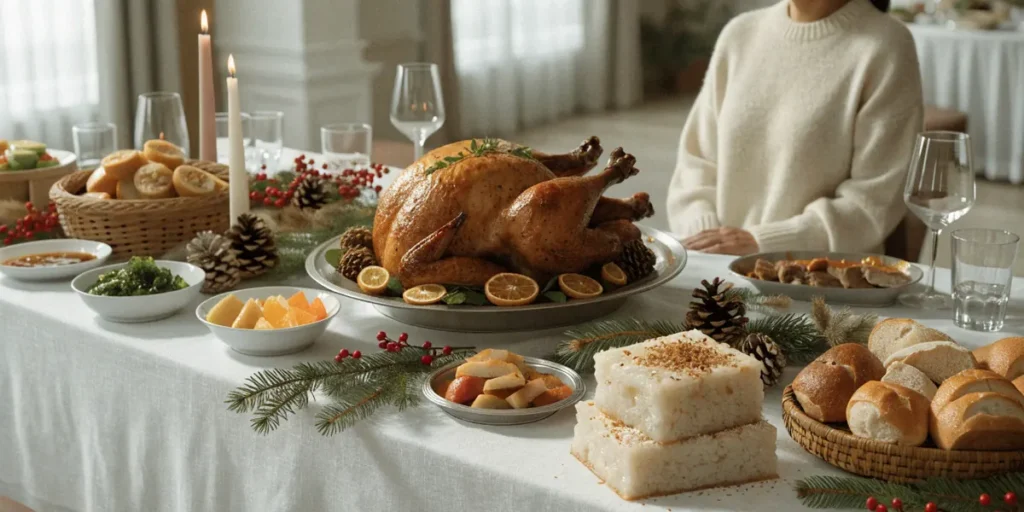
Noche Buena: The Filipino Christmas Table
We still remember the first time we walked into a Filipino family home on Christmas Eve. The lights were dimmed, the table was impossibly full, and somewhere near the centre sat a whole lechon with skin so glossy it caught every candle flame in the room. That smell — roasted pork, garlic rice, sweet hamonado — is what Noche Buena means to us. It is not just a meal. It is the moment the whole year has been building towards. And here in Australia, we have found that recreating that table is easier than you might think, especially once you know where to find the right lechon.
What Is Noche Buena? A Filipino Christmas Eve Tradition
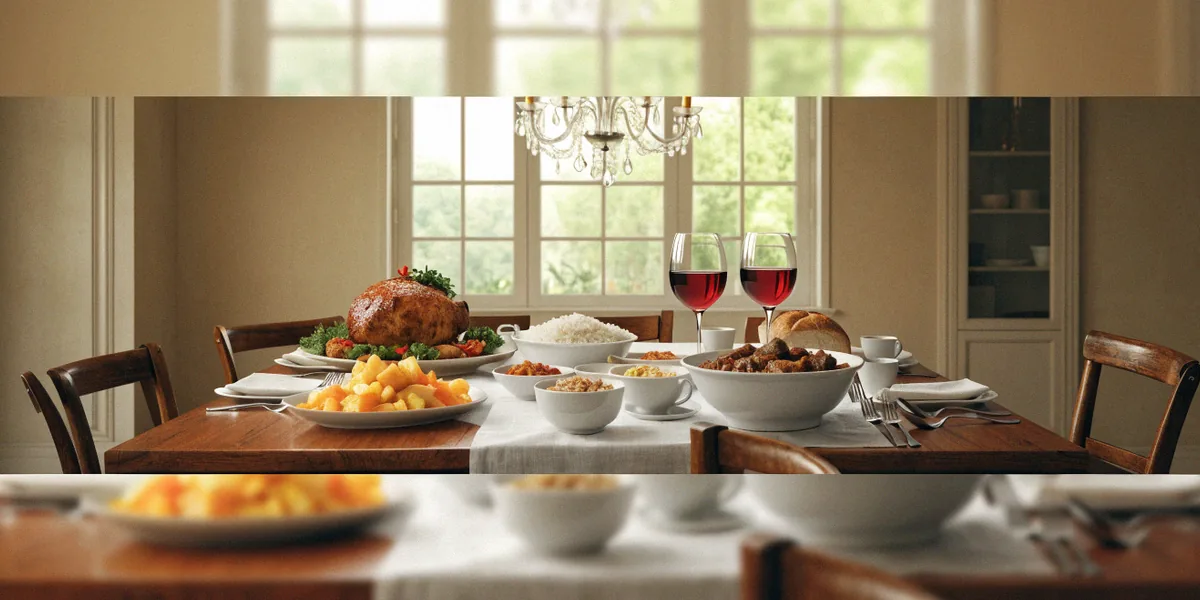
Noche Buena literally means “good night” in Spanish, and in Filipino homes it refers to the late-night feast shared after the Christmas Eve mass. It is the biggest meal of the Filipino calendar — bigger than Christmas Day lunch, bigger than New Year. And it comes with centuries of history behind it.
The History and Meaning Behind Noche Buena
The tradition traces back to Spanish colonial rule in the Philippines, when Catholic missionaries introduced the midnight mass and the feast that followed. Over roughly three centuries, Filipino families took that Spanish custom and reshaped it entirely — adding rice, noodles, native desserts, and of course, whole roast pork. What survived was the idea that Christmas Eve deserves a table worth staying up for.
The evening is anchored by Simbang Gabi, a nine-day series of dawn masses that runs from 16 to 24 December. The final mass ends close to midnight, and families go home to eat. That rhythm — church, then table — is the backbone of the whole celebration. Here in Australia, Filipino communities across Sydney, Melbourne, Brisbane and Perth hold their own Simbang Gabi services, often followed by shared meals that feel almost identical to the ones back home.
How Noche Buena Is Celebrated Across the Philippines
Celebrations vary by region, but a few things are universal. The table is laid out before midnight and nobody touches it until the family is complete. Lola says grace. The lechon is carved in front of everyone. Kids go for the sweets first. Then the eating stretches past 2am, followed by gift-giving and, in many homes, karaoke that nobody asked for.
In Cebu, the feast leans heavily on lechon and seafood. In Pampanga, it is all about hamonado and rich, slow-cooked dishes. In Ilocos, you might find bagnet and pinakbet on the same table. In Metro Manila, it is a mix of everything, with pancit always present because noodles represent long life.
The Star of the Table: Lechon and Cebu Lechon
Ask any Filipino what they look forward to most on Christmas Eve and the answer is almost always lechon. A whole pig roasted over charcoal for hours, stuffed with lemongrass, garlic, and herbs, until the skin crackles when you press it. It is the dish that signals the occasion. Without it, the table feels incomplete.
Why Cebu Lechon Stands Out
Cebu lechon has a reputation that has crossed oceans. Unlike the Manila version, which is often served with a liver-based sauce, Cebu lechon is so flavourful on its own that it needs no dipping sauce at all. The secret is in the stuffing — lemongrass, spring onions, garlic, and a blend of native herbs — and in the slow, patient roasting over live coals. The result is meat that is juicy and savoury all the way through, with skin that shatters rather than chews.
Because of that reputation, Cebu lechon is often air-flown to Australia for special occasions. Families who want the real thing for Noche Buena will arrange shipments weeks in advance, or order through local Filipino caterers who bring in Cebu-style roast pork for the Christmas season. It is a serious commitment, and for many of us, completely worth it.
Where to Find Lechon in Australia for Noche Buena
You do not need to fly anything in yourself. Filipino communities in Australia have built a solid network of suppliers who specialise in whole roast pork. A few options we recommend looking into:
- Lechon catering services such as Lechon Republic, which offer whole roast pork for Christmas orders and deliver across major metro areas.
- Filipino restaurants and bakeries in Sydney’s Blacktown, Melbourne’s Footscray, and Brisbane’s Inala that take Christmas pre-orders.
- Community Facebook groups for Filipino-Australians, where home-based cooks advertise lechon belly and whole-pig roasts from November onwards.
- Direct importers who bring in Cebu lechon on a seasonal basis — usually booked out by early December.
Our advice: order early. Christmas lechon slots fill up fast, and by mid-December most suppliers are fully booked.
Essential Filipino Dishes for Noche Buena
Lechon is the centrepiece, but a proper Noche Buena table needs more. These are the dishes we always see, and the ones we always make sure to include.
Sweet and Savory Mains: Hamonado and Pancit
Hamonado is a sweet glazed pork dish, usually made with pineapple juice, soy sauce, and brown sugar. It is slow-cooked until the sauce thickens and coats the meat. On the Christmas table it sits beside the lechon as a softer, sweeter counterpoint. Many families also serve a Christmas ham glazed in the same style, a nod to both Spanish and American influences.
Pancit is non-negotiable. The noodle dish symbolises long life, and it is a must-have on the Noche Buena table alongside lechon. Whether it is pancit canton, pancit bihon, or the thicker pancit malabon, someone always brings a tray. The rule is simple: do not cut the noodles, and do not run out.
Other mains that regularly appear:
- Lumpia — spring rolls, either fresh (sariwa) or fried (shanghai), symbolising gold and prosperity.
- Kare-kare — oxtail stew in peanut sauce, often served with bagoong.
- Relleno — stuffed chicken or fish, a Spanish-era holdover.
- Queso de bola — Edam cheese, served with crackers and jam, a direct Spanish import.
Traditional Rice Cakes and Desserts
Filipino Christmas sweets are their own category. Bibingka — a warm rice cake baked with coconut milk and topped with salted egg and cheese — is the one most closely tied to Simbang Gabi. Vendors sell it outside churches at dawn, and families bring it home for the Noche Buena table.
Alongside bibingka, you will usually find:
- Puto bumbong — purple glutinous rice steamed in bamboo tubes, topped with butter, sugar, and coconut.
- Leche flan — the dense caramel custard that ends almost every Filipino celebration.
- Ube halaya — purple yam jam, often served with leche flan on top.
- Fruit salad — the Filipino version, made with condensed milk and young coconut.
How to Host a Noche Buena in Australia
Hosting Noche Buena in Australia takes a bit of planning, but the ingredients are closer than you think. Here is how we approach it.
Sourcing Filipino Ingredients Locally
Filipino stores in Sydney’s Blacktown and Melbourne’s Footscray stock Noche Buena staples like hamonado cuts, bibingka mixes, and frozen puto bumbong. You will also find banana leaves, coconut milk, ube extract, and queso de bola without much trouble. Brisbane has a strong cluster around Inala, and Perth has options in Morley and Canning Vale. Most of these stores take Christmas pre-orders from mid-November.
For fresh items, Asian grocers in the same suburbs usually carry the same products at competitive prices. We recommend doing one big shop in the first week of December so nothing runs out close to the date.
Filipino Catering and Lechon Delivery Services
If you are hosting a crowd, catering is the sane option. Lechon catering services in Australia, such as Lechon Republic, offer whole roast pork for Christmas orders, often with add-ons like pancit, lumpia, and kare-kare. Many deliver to your door on Christmas Eve morning, which means the lechon arrives warm and ready to carve.
For smaller gatherings, lechon belly rolls are a good compromise — same crispy skin, less commitment. We usually order one whole lechon for the main event and a couple of belly rolls as backup, because someone always wants seconds.
Noche Buena and the Australian-Filipino Community
Christmas in Australia is hot, and that changes the table in interesting ways. Filipino-Australian families have adapted beautifully, and the result is a Noche Buena that feels both familiar and distinctly local.
Blending Filipino and Australian Christmas Customs
Prawns are the obvious addition. An Australian Christmas without prawns feels wrong, so they end up on the Noche Buena table alongside the lechon. Some families do a full seafood platter. Others add a pavlova next to the leche flan. Cold cuts and salads make an appearance because nobody wants to eat heavy stews in 35-degree heat.
The lechon stays. Pancit stays. Bibingka stays. Everything else is negotiable, and that flexibility is what keeps the tradition alive here.
Community Celebrations and Potlucks
Filipino community groups across Australia — from Sydney’s Filipino Community Council to parish groups in Melbourne and Brisbane — organise Simbang Gabi services and shared Noche Buena potlucks in the weeks before Christmas. These events are how many second-generation Filipino-Australians learn the dishes and the rituals. Everyone brings one dish. Someone always brings lechon. Someone always brings pancit. And the table ends up looking exactly like the ones our grandparents set.
Frequently Asked Questions
What is Noche Buena and when is it celebrated?
Noche Buena is the traditional Filipino Christmas Eve feast, held late on 24 December after the final Simbang Gabi mass. It is the biggest meal of the Filipino Christmas season and centres on dishes like lechon, hamonado, pancit, and bibingka.
Can I get authentic Cebu lechon in Australia?
Yes. Cebu lechon is regularly air-flown to Australia for special occasions, and several Filipino caterers in Sydney, Melbourne, and Brisbane offer Cebu-style whole roast pork for Christmas orders. Booking early is essential — most suppliers close their Christmas lists by early December.
Where can I buy Noche Buena ingredients in Australia?
Filipino stores in Sydney’s Blacktown and Melbourne’s Footscray stock Noche Buena staples like hamonado, bibingka, puto bumbong, and queso de bola. Similar stores operate in Brisbane’s Inala and Perth’s Morley, and most accept Christmas pre-orders from November.
Do I need to serve lechon at Noche Buena?
It is not strictly required, but lechon is considered the centrepiece of the Noche Buena table. If a whole pig is too much, lechon belly is a popular alternative that still delivers the crispy skin and savoury meat.
Is Noche Buena celebrated in Australia?
Absolutely. Filipino-Australian families across the country celebrate Noche Buena every year, often blending it with Australian Christmas customs like prawns, seafood platters, and pavlova. Community groups also host Simbang Gabi services and shared potlucks throughout December.
Noche Buena is not really about the food, even though the food is extraordinary. It is about the people around the table, the ones who stayed up for the last Simbang Gabi, the ones who carved the lechon, the ones who argued over the last piece of leche flan. Here in Australia, we get to keep that tradition going — with a little help from Blacktown, Footscray, and a well-timed lechon order. However you celebrate this year, we hope your table is full, your skin is crispy, and your Christmas Eve is a good night in every sense.