
How to Make Lechon Belly in a Home Oven: A Crispy Filipino Roast Pork Guide
Recreating the crackling of a whole spit-roasted lechon without a rotisserie sounds impossible, and for a long time we thought it was. A whole pig needs hours of turning over live coals, a setup most of us simply don’t have in an Australian backyard. But there’s a shortcut that delivers the same shattering skin and juicy meat: lechon belly. It fits inside a standard oven, cooks in a fraction of the time, and still carries the garlicky, lemongrass-scented punch that makes Cebu lechon famous. If you’ve been searching for a way to bring Filipino food into your own kitchen, this is the recipe to start with.
Why Lechon Belly Is the Home Cook’s Best Friend
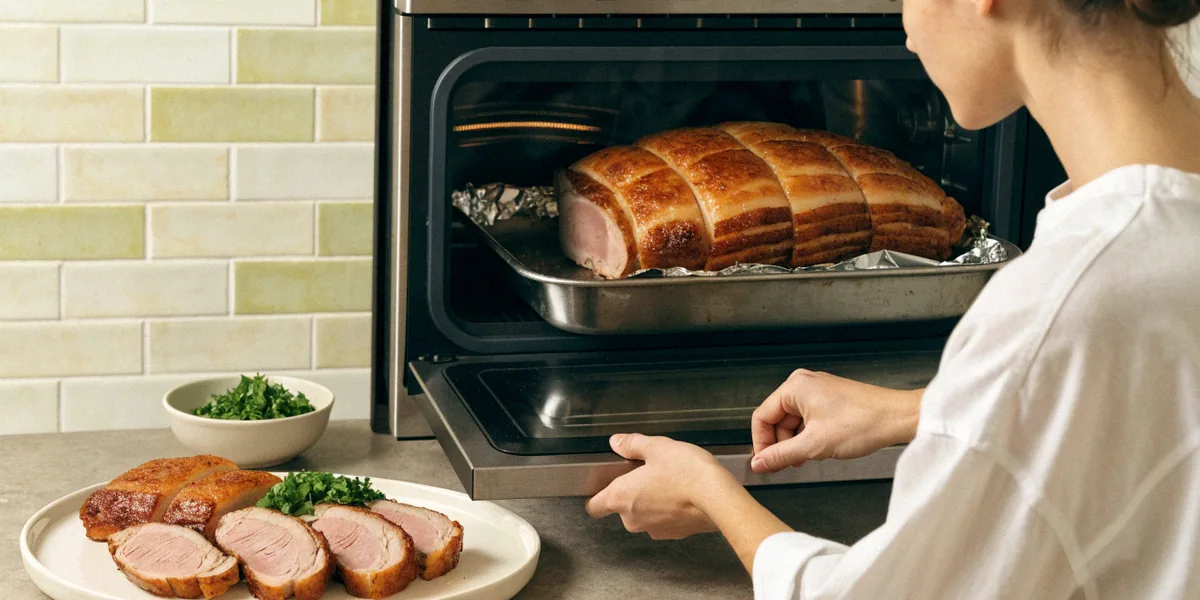
Lechon belly, known in the Philippines as liempo, is essentially lechon in miniature. You get the same contrast of blistered, crunchy skin over rich, seasoned pork, but you’re working with a manageable cut that fits on a roasting rack. For anyone cooking Filipino food in Australia, that’s a game changer. No need to order a whole pig from a specialty supplier or build a makeshift spit in the backyard.
Cebu lechon is renowned for its aromatic stuffing of lemongrass, garlic, and spring onions, and that’s the flavour profile we’re chasing here. You won’t get the smoky char of charcoal roasting, but you can get remarkably close with a hot oven and the right aromatics.
What Makes Lechon Belly Different from Whole Lechon
Whole lechon is cooked over coals for hours, with the pig turned constantly so the skin bastes in its own fat. The result is an even, blistered crust and meat that’s steamed from the inside by the stuffing. Lechon belly mimics this by rolling the pork around the stuffing, creating a compact roast where the skin is exposed to dry heat while the interior stays moist.
The trade-off is that you’re working with a smaller surface area, so timing is tighter. But it also means you can control the process far more precisely, and you don’t need to feed a village to justify making it.
Cebu Lechon Flavours You Can Recreate
Cebuano lechon is distinct from its Manila cousin because it leans heavily on herbs rather than heavy sauces. The stuffing does most of the work, perfuming the meat from within. We can replicate that with ingredients that are easy to find in Australia:
- Lemongrass stalks, bruised and split
- Whole garlic cloves, smashed
- Spring onions, roughly chopped
- Bay leaves
- Salt and cracked black pepper
- Calamansi, or lemon and lime as a substitute
Choosing and Preparing Your Pork Belly
The quality of your pork belly determines everything. A thin, uneven cut will cook unevenly and give you patchy crackling. We recommend visiting a local butcher rather than grabbing a pre-packed tray from Coles or Woolworths, though those work in a pinch if you’re short on time.
What to Look for at the Butcher
Australian butchers often sell pork belly with skin on; ask for it scored for even crackling. If they can run it through the scoring machine, even better, because consistent cuts let the fat render out and the skin blister uniformly.
Here’s what we look for:
- Even thickness across the whole slab, ideally 3 to 4 centimetres
- Skin on, dry to the touch, not tacky
- A good layer of fat beneath the skin, roughly 1 to 2 centimetres
- Scored at about 1 centimetre intervals, cutting through skin and fat but not the meat
Ask your butcher to leave the belly as a single rectangular piece rather than trimming it into strips. You need the full slab to roll around the stuffing.
Scoring and Drying the Skin for Maximum Crackle
If your butcher hasn’t scored the skin, do it yourself with a sharp knife or a clean box cutter. Work carefully, cutting through the skin and fat without piercing the meat, because any moisture escaping from the meat will steam the skin instead of crisping it.
The night before roasting, pat the skin completely dry with paper towels, then leave the belly uncovered on a rack in the fridge. This dries the surface and is the single most important step for crackling. A dry skin crisps; a wet skin chews.
The Cebu-Style Stuffing and Marinade
This is where the Cebu character comes through. The stuffing isn’t just filler; it’s the flavour engine. As the pork roasts, the aromatics release steam and fragrance that season the meat from the inside.
Essential Ingredients for Cebuano Flavour
You’ll need:
- 3 to 4 stalks of lemongrass, bruised with the back of a knife
- 1 whole head of garlic, cloves smashed and peeled
- 1 bunch of spring onions, halved
- 4 to 6 dried bay leaves
- 1 tablespoon coarse salt
- 1 teaspoon cracked black pepper
- Juice of 2 calamansi, or 1 lemon and 1 lime
Calamansi, a Filipino citrus, can be substituted with lemon or lime in Australian kitchens. The flavour is slightly different, but the acidity does the same job of cutting through the richness of the pork. Lemongrass is widely available at Asian grocers, and most Coles and Woolworths stores now stock it in the fresh herbs section.
How to Stuff and Roll the Belly
Lay the belly skin-side down on a clean board. Rub the meat with salt, pepper, and citrus juice. Arrange the lemongrass, garlic, spring onions, and bay leaves along the centre.
Roll the belly tightly around the stuffing, then tie it with kitchen twine at 3 to 4 centimetre intervals. The roll should be firm and compact. Rub the skin with a little oil and a final sprinkle of salt, then place it seam-side down on a rack.
Oven Roasting: Step-by-Step for Crispy Skin
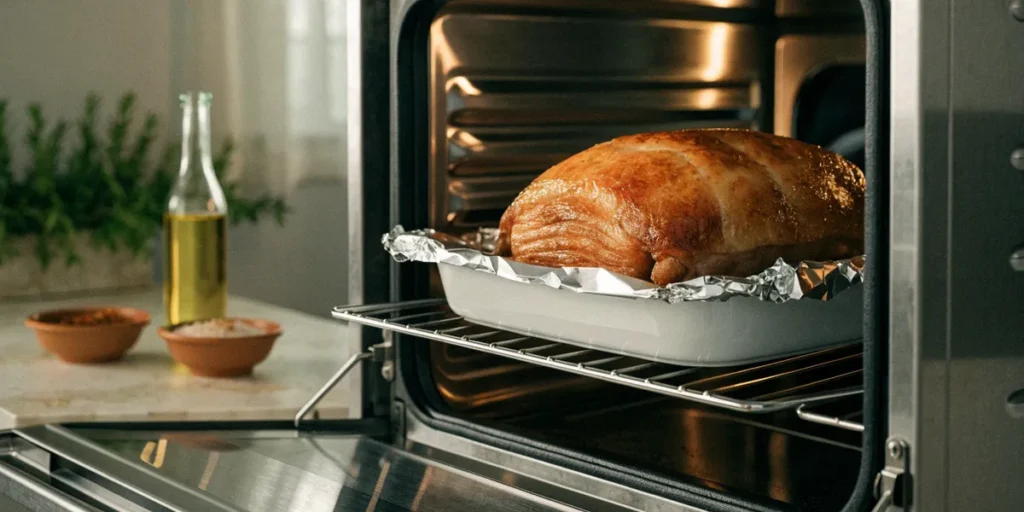
Preheat your oven to 220°C. Place the rack over a roasting pan and pour about a cup of water into the pan to catch drippings and prevent smoking. Roast the belly at high heat for 30 minutes to blister the skin, then reduce to 160°C and continue cooking until the internal temperature reaches 70°C.
Temperature and Timing Guide
- 220°C for 30 minutes to start the crackling
- 160°C for 1.5 to 2 hours, depending on the size of your belly
- Rest for 15 minutes before carving
Rotate the pan halfway through cooking so the skin browns evenly. If your oven has hot spots, this step matters more than you’d think.
The Final Blast for Perfect Crackling
Once the meat is cooked through, crank the oven to 250°C or switch on the grill element. Watch it closely, because the skin can go from golden to burnt in under a minute. You’re looking for a deep amber colour with visible bubbles across the surface. If some patches lag behind, rotate the pan and give it another 2 to 3 minutes.
Serving and Storing Your Lechon Belly
Let the roll rest before carving, then slice it into thick rounds so each piece has skin, meat, and stuffing. Mang Tomas sauce is a popular bottled lechon sauce available at Asian grocers in Australia, and it’s the classic pairing. A simple vinegar dip with garlic, chilli, and a pinch of sugar also works beautifully.
Traditional Dipping Sauces and Sides
- Mang Tomas lechon sauce
- Spiced vinegar with red onion and bird’s eye chilli
- Steamed white rice
- Pickled green papaya or atsara
How to Keep Leftovers Crispy
Crackling is best enjoyed fresh, but leftovers have a second life. Reheat slices in an air fryer at 180°C for 5 to 6 minutes to bring the skin back. You can also chop the meat into sisig, or pile it into a Filipino-style sandwich with pickles and a smear of liver sauce.
Troubleshooting Common Home Oven Issues
Even with a solid method, things can go sideways. Here’s how we handle the most common problems.
Why Your Skin Didn’t Crackle
Nine times out of ten, it’s moisture. Either the skin wasn’t dried properly, the meat wasn’t scored deeply enough, or the oven wasn’t hot enough at the start. Next time, leave the belly uncovered in the fridge overnight and hit it with that initial 220°C blast without opening the door.
Adjusting for Fan-Forced Ovens
Fan-forced ovens are common in Australia and may require lower temperatures to prevent burning. Drop each setting by about 20°C, so 200°C for the initial blast and 140°C for the slow cook. If the skin starts darkening too fast, tent it loosely with foil and continue cooking the meat through.
If your kitchen fills with smoke, it’s usually fat hitting the bottom of the pan. Keep water in the roasting tray and top it up as needed.
FAQ
Can I make lechon belly without lemongrass?
Yes, though the flavour will be less authentically Cebuano. You can substitute with lemon zest and a little grated ginger, but lemongrass is easy to find at Asian grocers across Australia, so we recommend tracking it down.
How long does lechon belly take to cook?
For a 1.5 kilogram roll, plan on about 30 minutes at 220°C followed by 1.5 to 2 hours at 160°C. Always check the internal temperature rather than relying purely on time.
Can I prepare lechon belly ahead of time?
Absolutely. Roll and tie the belly the day before, leave it uncovered in the fridge, and roast it the next day. The dry skin will actually crisp better after an overnight rest.
What’s the best way to reheat leftover lechon belly?
An air fryer at 180°C for 5 to 6 minutes is our go-to. It revives the crackling without drying out the meat. A regular oven at 200°C works too, but keep an eye on it.
Is lechon belly the same as crispy pork belly?
They’re similar, but lechon belly is distinguished by its Cebu-style stuffing of lemongrass, garlic, and spring onions. Crispy pork belly in Chinese or Western cooking usually relies on different seasonings and doesn’t include the rolled herb filling.
Making lechon belly at home brings a genuine taste of Cebu to Australian kitchens, and it’s the kind of dish that turns an ordinary weekend into a gathering. Whether you’re feeding family, hosting friends, or simply craving that unmistakable crackle, this method gives you a result worth the effort. Give it a go, and don’t be surprised if it becomes your new favourite roast.